
A letter from WindWalkers’ Executive Director
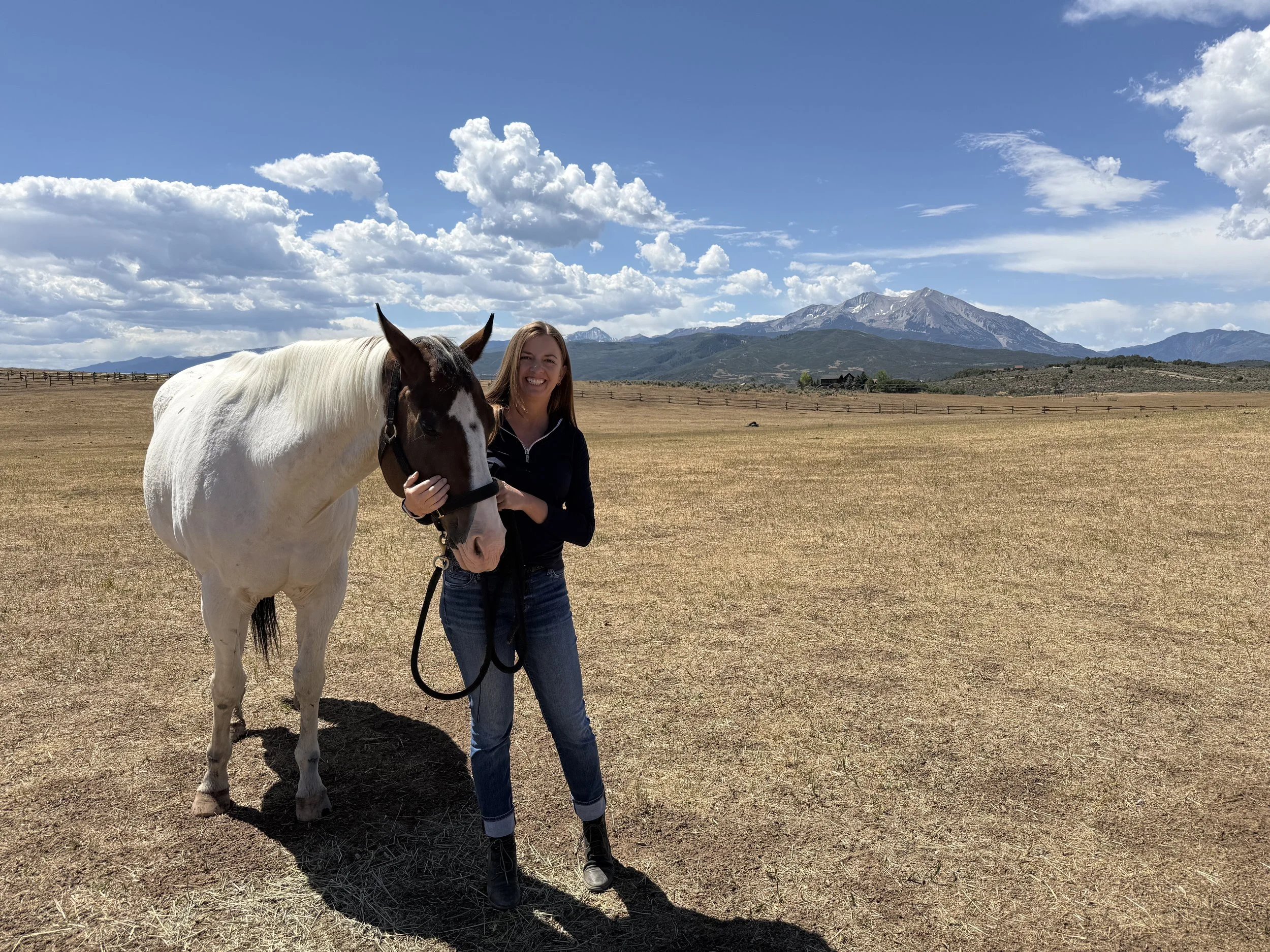
As I reflect on my first year as Executive Director of WindWalkers, I'm filled with gratitude, joy, and hope. It has been an incredible privilege to serve this remarkable organization and to become part of a community that believes so deeply in the horse-human connection and the healing power of horses.
Horses have shaped my whole life, back to a first ride on a neighbor's pony when I was four, through twenty years as a professional Hunter/Jumper trainer in this valley. What I've come to understand this year, in a way I couldn't have from the outside, is what WindWalkers actually does and how many lives our humans and horses touch in a given week.
Our mission is simple to state and harder to live out: we empower people of all ages and abilities through relationships with horses, the land, and each other.
WindWalkers has been doing this work for twenty years. Right now, we serve about 135 people a week through a herd of 22 horses at our beautiful ranch. We welcome veterans working through PTSD, traumatic brain injuries, kids with autism, ADHD, and learning disabilities. Adults recovering from strokes, or living with multiple sclerosis, spinal cord injuries, or muscular dystrophy. Seniors looking for connection after retirement or loss. Kids and adults with no diagnosis at all who just want to be introduced to horses and learn to ride well. Participants with cognitive or physical disabilities find opportunities to fully enjoy and experience horses. Our PATH-certified instructors build sessions around each person's actual goals. No two sessions look the same.
"Equine-assisted services" is a broad term, and it undersells what actually happens in an arena. A nonverbal child who has spent years in a classroom built for kids who talk stands at the shoulder of a twelve-hundred-pound animal that will not move on command, will not fake calm, and has no reason to pretend to like her. If she's anxious and scattered, the horse gets anxious and scattered too.
The only way to get that horse to walk quietly beside her is for her to become quiet herself. That's not a metaphor. It's why groundwork, the unmounted work of haltering, leading, and grooming a horse, is one of the most direct paths to emotional regulation we've found in twenty years of doing this. The horse isn't being nice but honest, and that honesty teaches in a way a classroom can't.
In the saddle, the mechanics are different but just as real. A horse's gait moves a rider's hips and core through a pattern close to human walking this builds strength and balance here that physical therapy alone sometimes can't reach on its own. This can be particularly impactful for kids living with cerebral palsy or an adult recovering from a stroke. And for a rider who has spent a childhood being told what she can't do, learning to ask an animal many times her size to move, and having it actually respond, is proof of a kind of competence the rest of her week may not offer her. That's where the confidence comes from: from being trusted by one, and earning that trust back.
None of that works without a herd that's genuinely well cared for, and that has been one of my priorities this year. A program that treats its horses as tools rather than partners will burn through them and lose the trust that makes any of this possible. We put real time and money into the ranch itself this year: repairs, equipment, better systems for day-to-day care, because the welfare of our horses isn't separate from the quality of our programming. It's the foundation of it.
I've also worked hard to make sure we have best practices in place, with real accountability now built into every dollar that moves through this organization. This year, I took our full-time staff to the PATH International National Conference, and they came back with new training and renewed energy in the barn. We also put our mission and vision into writing for the first time in this organization's twenty-year history, so every staff member, board member, and new partner now knows exactly what we're building and why.
Access is the thread running through all of it. Horses have become expensive and exclusive almost everywhere else, and one of the things I'm proudest of this year is how many people who would never otherwise get near a horse came through our gate anyway. Watching people connect with a horse for the very first time, and seeing what that changes for them, is a good reminder of why access matters even outside our clinical programming. Community and clinical work aren't separate missions here. They're two doors into the same barn.
Over the next several years, I want WindWalkers recognized as a regional leader in equine-assisted services, not just a well-loved local program. That means growing our board thoughtfully, diversifying how we fund this work so we aren't dependent on any single source, and deepening the partnerships we already have with schools, community organizations, veterans' groups, and mental health providers across the valley. It also means opening new ways for horses who can no longer be ridden to keep working, through groundwork and unmounted programming that lets more people access this herd, not fewer.
Thank you again for the trust you've placed in me this year, and for everything you give this place: your time, your support, your belief in the work. I'm looking forward to what we build together next.
With gratitude,
Ginger Opp
Executive Director